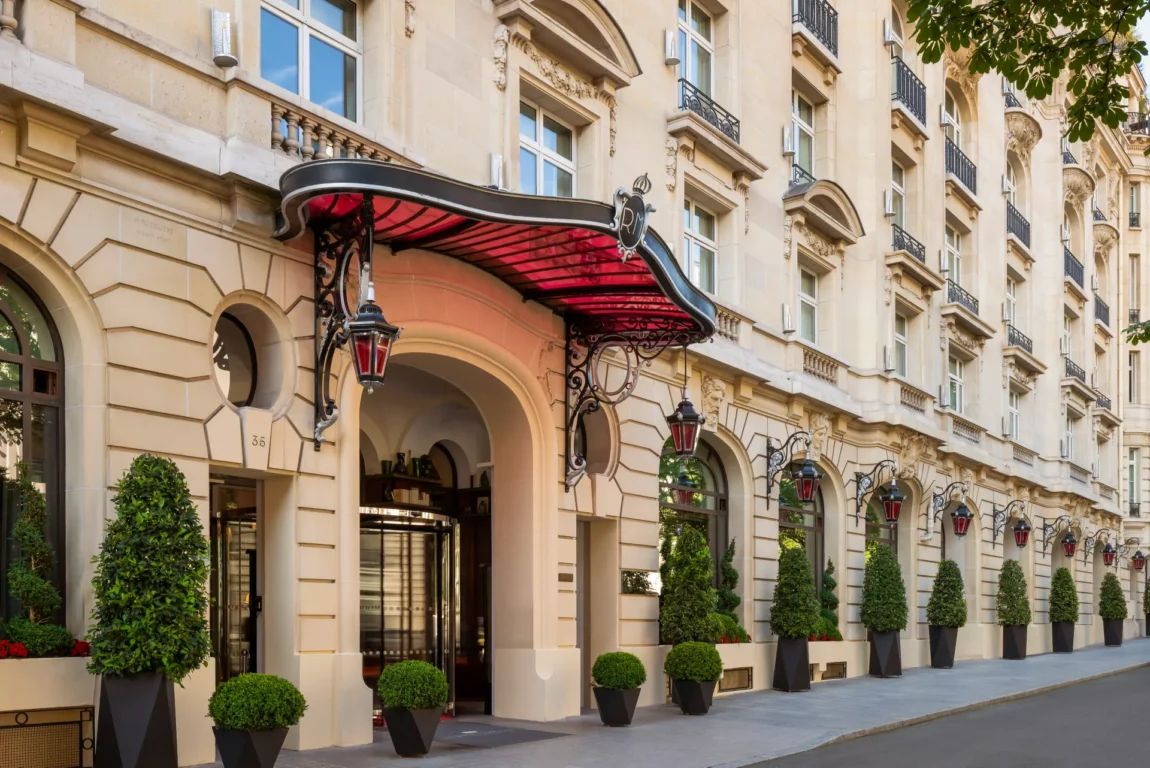
The Milan hotel in The Devil Wears Prada 2 is real but only up to a point. Here’s what actually exists, what was built on a set, and why Brera was the only neighbourhood that could have carried this story.
First, The Neighbourhood
If you’re going to set a film about the intersection of power, beauty, and creative ambition in Milan, Brera is the only honest choice. Sometimes called the Milanese Montmartre, it houses the Brera Academy of Fine Arts and the Brera Art Gallery, which together shaped its identity as an artists’ neighbourhood with a distinctly bohemian atmosphere. That reputation has since acquired a certain amount of money and today Brera is considered one of the most bourgeois neighbourhoods in Milan, with many describing it as boho chic. But the bones of the place are still there.
Much of Milan has wide thoroughfares and a lot of traffic. Brera is a welcome break: little cobbled streets crossed by roads that are for residents only, very much like certain historic quartiers in Paris. Via Brera, the main artery, is lined with art shops, galleries, and flower stalls. The smaller side streets reveal hidden courtyards, ivy-covered buildings, and artisan workshops that have been there for generations. The atmosphere is both romantic and slightly self-aware, a neighbourhood that knows it’s beautiful and has made a certain peace with it.
For The Devil Wears Prada 2, this is where a significant portion of the Milan action takes place. The Pinacoteca di Brera was completely sealed off during filming, with police redirecting museum visitors to a makeshift entrance at the back while limousines with blacked-out windows lined the surrounding streets. The image is almost too perfect: one of Italy’s greatest art institutions, temporarily closed to the public so that a film about fashion could use its courtyard. Napoleon, whose statue presides over that same courtyard after he filled the gallery with art seized from churches across northern Italy, would probably have had opinions. Beyond the Pinacoteca, Brera is also home to some of Milan’s most characterful drinking and dining: N’Ombra de Vin, a wine bar in a former 16th-century Augustinian refectory with vaulted ceilings and a wine cellar dating to the 15th century, and Bar Jamaica, a historic institution where poets, artists, and intellectuals have gathered since 1911. The kind of places that don’t need a film crew to feel dramatic.
Its mix of shops, restaurants, and galleries makes it feel alive in a way that very few neighbourhoods in any city manage. Design in Brera is never just an exhibition. It’s part of a broader, living context. Which is exactly why it works as a backdrop for a story about what happens when that world starts to crack.
The Milan Hotel in The Devil Wears Prada 2
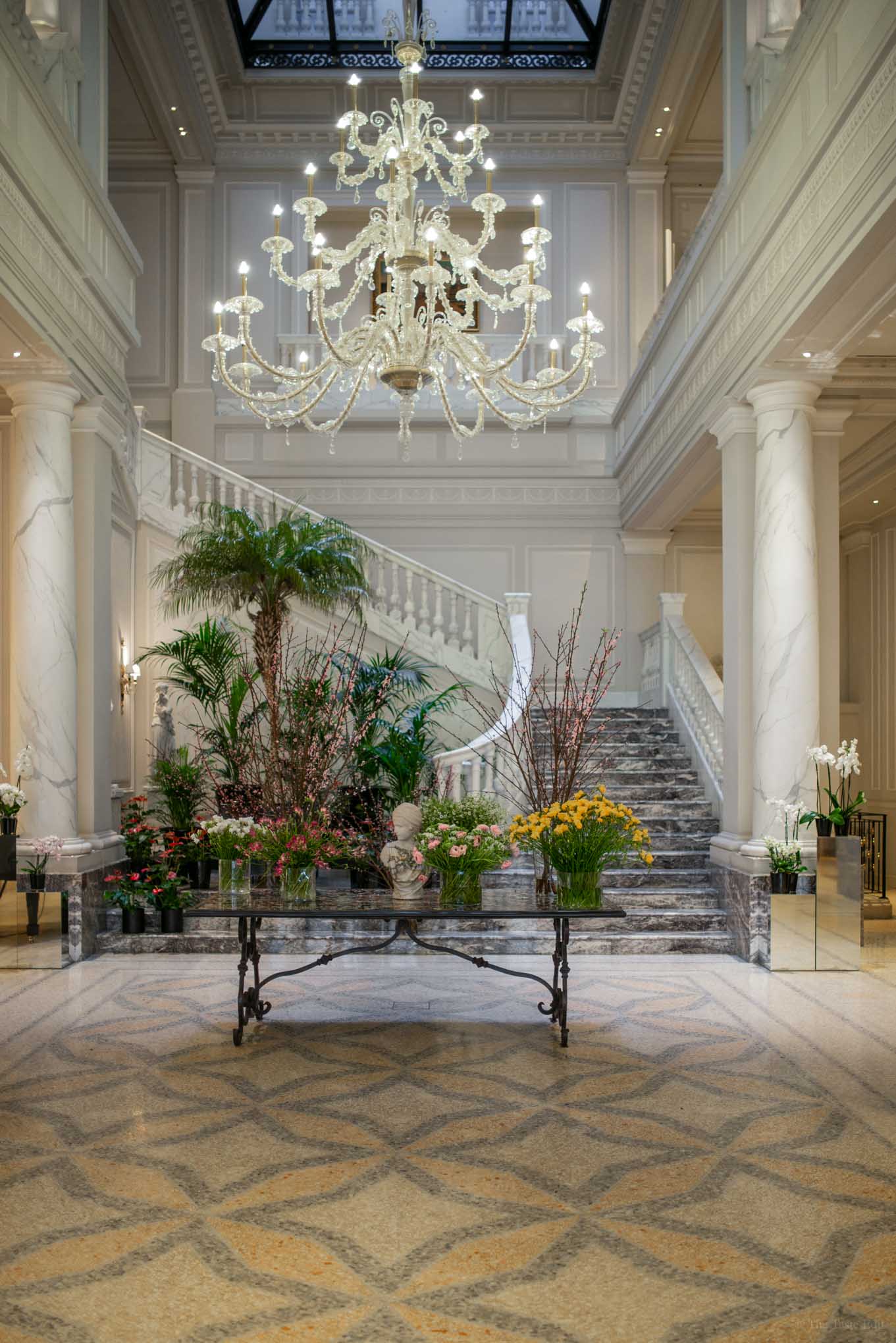
Palazzo Parigi sits on the edge of Brera, close enough to feel like part of it, formal enough to keep its distance. Its owner, architect Paola Giambelli, has created a unique independent hotel that sits on a level with any of the established luxury players and is as memorable as any boutique. The entry, with its marble columns and grand staircase, is as imposing as they come.
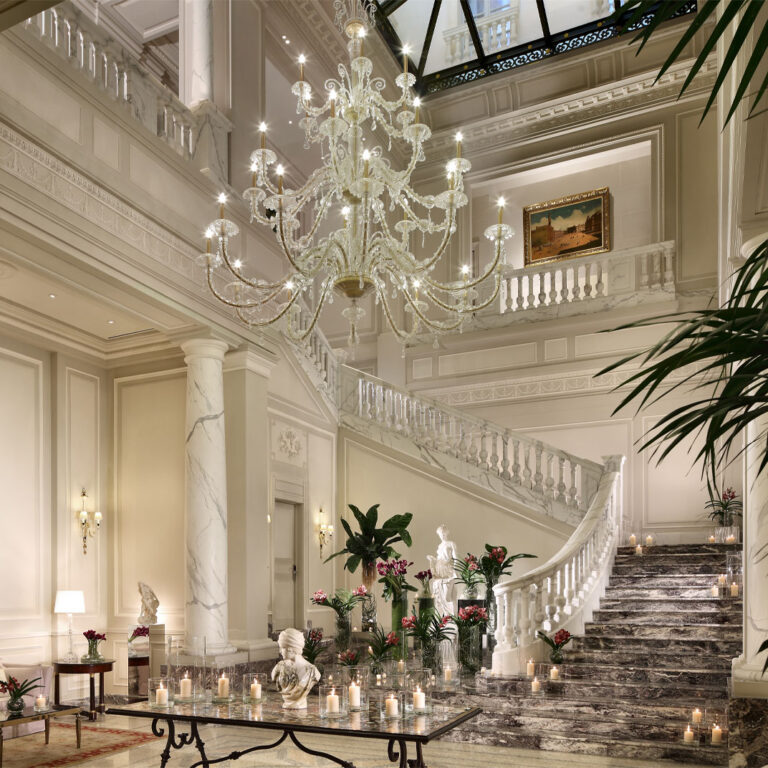
That staircase is what you see on screen. The lobby sequences in the film are genuinely Palazzo Parigi: the marble, the proportions, the particular quality of light that comes from a building that has always known it was important.
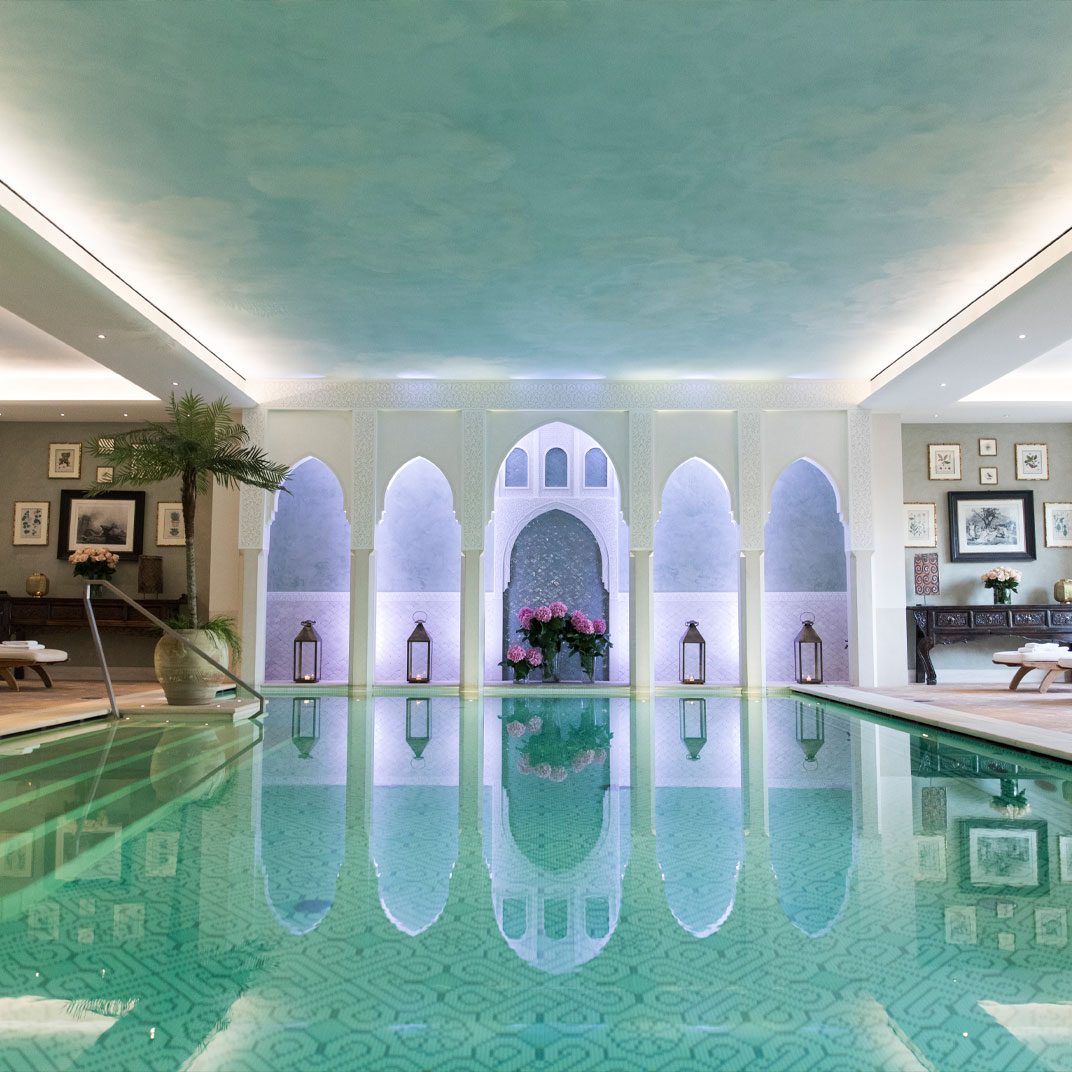
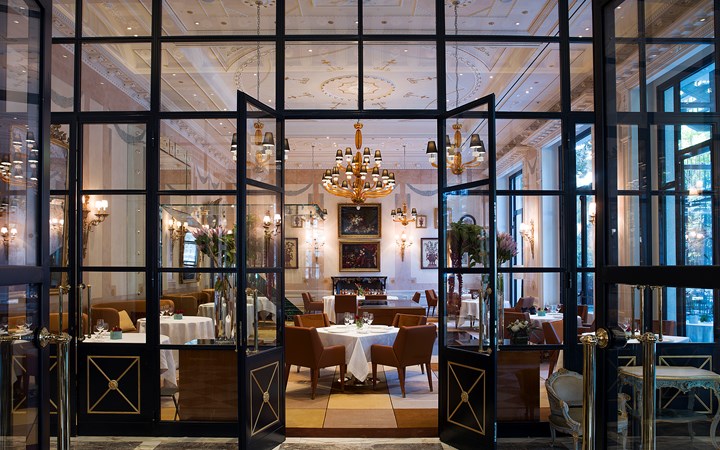
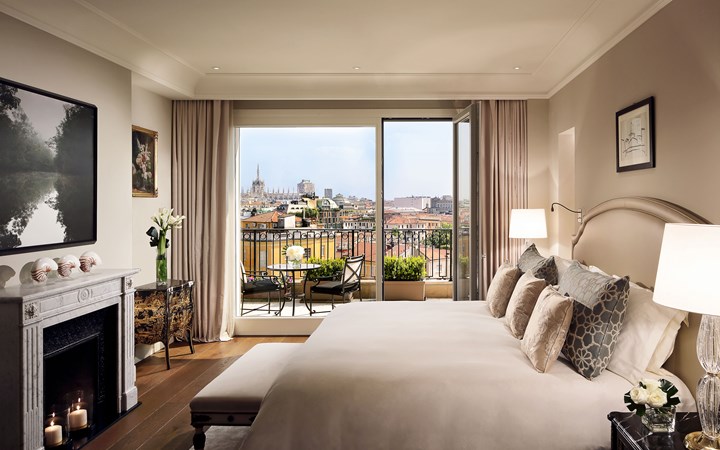
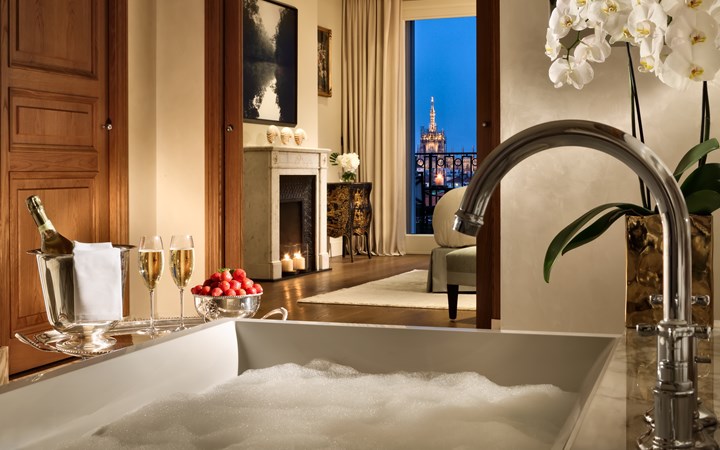
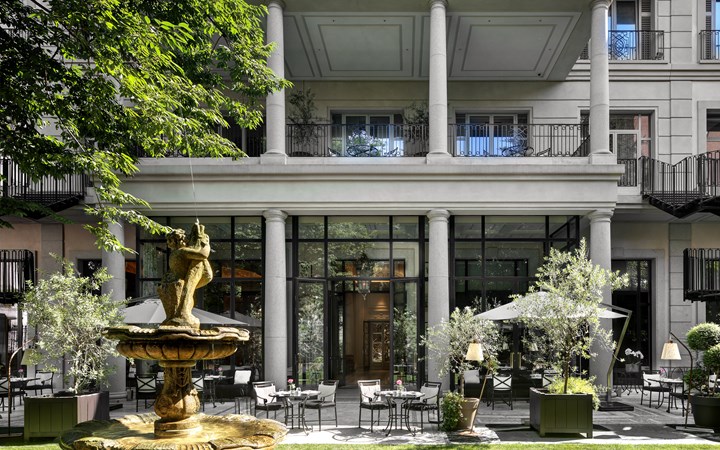
Originally a private palace built in the late 1700s, it was all but destroyed during WWII, became a bank, and was eventually restored to its palatial status. The 95 rooms and suites come in two styles: Milanese, with cream furnishings and natural wooden fittings, and Parisian, with a classically chic feel. Every room has a terrace or balcony, many with views of the Duomo, Sforza Castle, or the Porta Nuova skyline. The interiors were designed by Pierre-Yves Rochon, the same hand behind the George V in Paris and Claridge’s in London.
About The Hotel Rooms
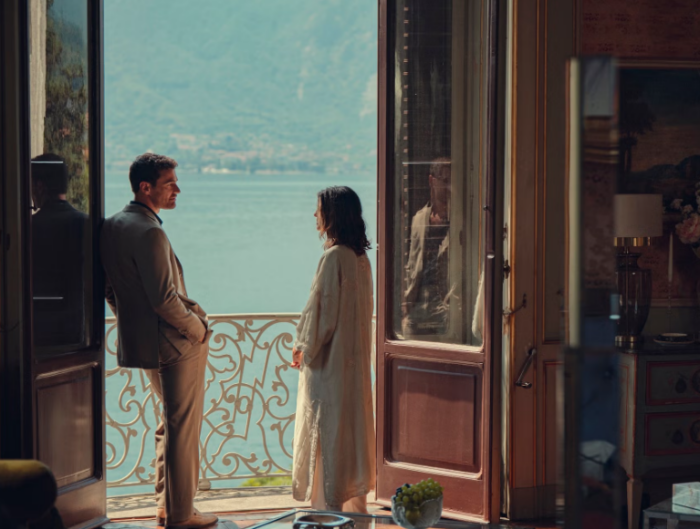
The bedrooms you see on screen, Andy’s soft light blue room and Miranda’s grand, sharply modern suite, do not exist at Palazzo Parigi, and they were never meant to. They were built on set, dressed by a production designer, and engineered to tell you something about each character before they’ve said a word. Andy gets the romantic, slightly dreamy room. She’s come a long way from her Lower East Side walk-up, but there’s still something soft about her. Miranda gets architecture as armor: no warmth, no sentimentality, everything controlled.
This is standard practice, and the first film did exactly the same thing. Miranda’s famous Paris hotel room, the one where Andy glimpses her without make-up and momentarily human, was not the Plaza Athénée. It was shot at the St. Regis in New York. The geography of the Devil Wears Prada universe has always been more emotional than literal.
The Rest of Milan
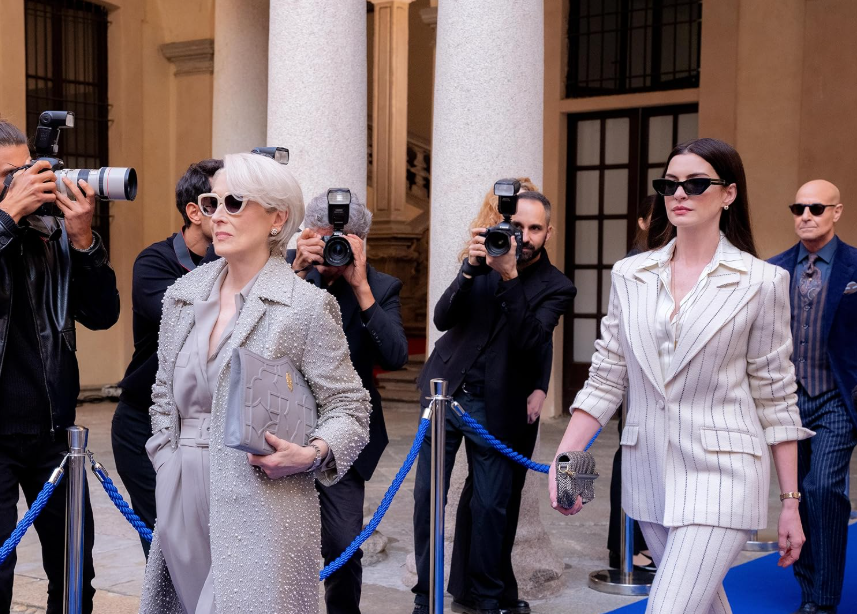
The hotel and Brera are only part of the picture. Streep and Tucci filmed at the Dolce & Gabbana Milan Fashion Week show, fiction and real fashion week collapsing into one another in a way that the original film, shot mostly in New York offices, could only have dreamed of. A pop-up at La Rinascente, complete with a replica of Miranda’s desk and giant red stilettos outside the entrance, confirmed that Milan was not playing a passive role. Milan’s counselor for culture put it plainly: it’s a film that is good for the city. It is. And Brera, in particular, earns its screen time.
The Devil Wears Prada 2 opens in cinemas on May 1, 2026


 TheHotelTrotter.com is curated by greek journalist and fanatic hotel lover Eleni Stasinopoulou. With the eye of a fashion and lifestyle editor, Eleni hopes to inspire all connoisseurs of traveling, focusing on stylish hotel moments around the globe.